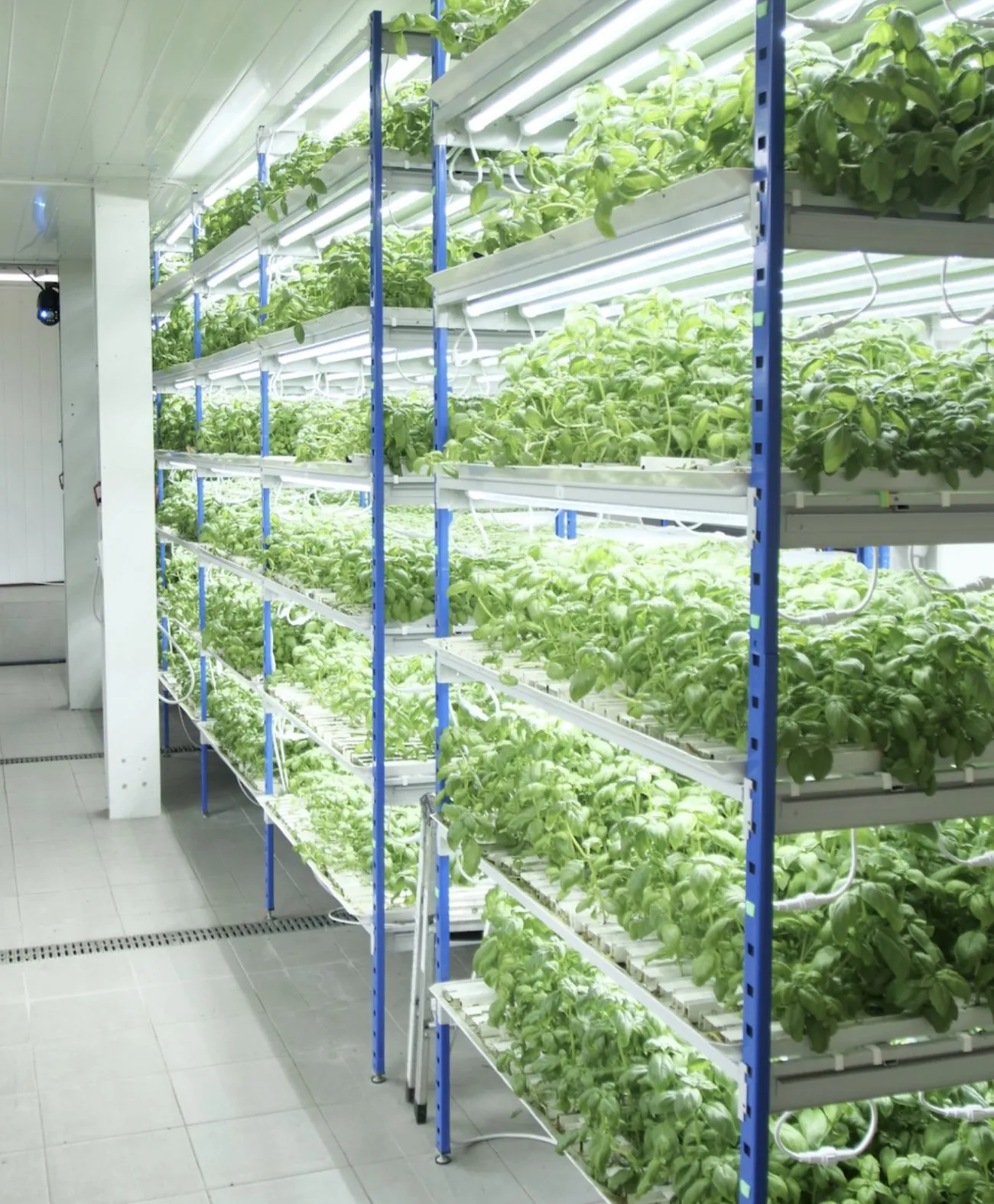
A display case that grows.
A compact hydroponic module producing 7 kg of basil and 4 kg of microgreens per month from 0.7 m² — no substrate, no pesticides, harvested the day it sells.
A rack that replaces your supplier.
The FT-7 is a vegetative module for indoor cultivation of basil and microgreens. Five growing levels, six hydroponic tanks, 230 planting cassettes and 15 full-spectrum LED bars, with its own nutrient tank and control unit.
It occupies 0.7 m² of floor and plugs into a standard 220 V socket. No building work required: a socket, a water point and a room at around 20 °C. It fits a back room, a warehouse, or the sales floor itself.
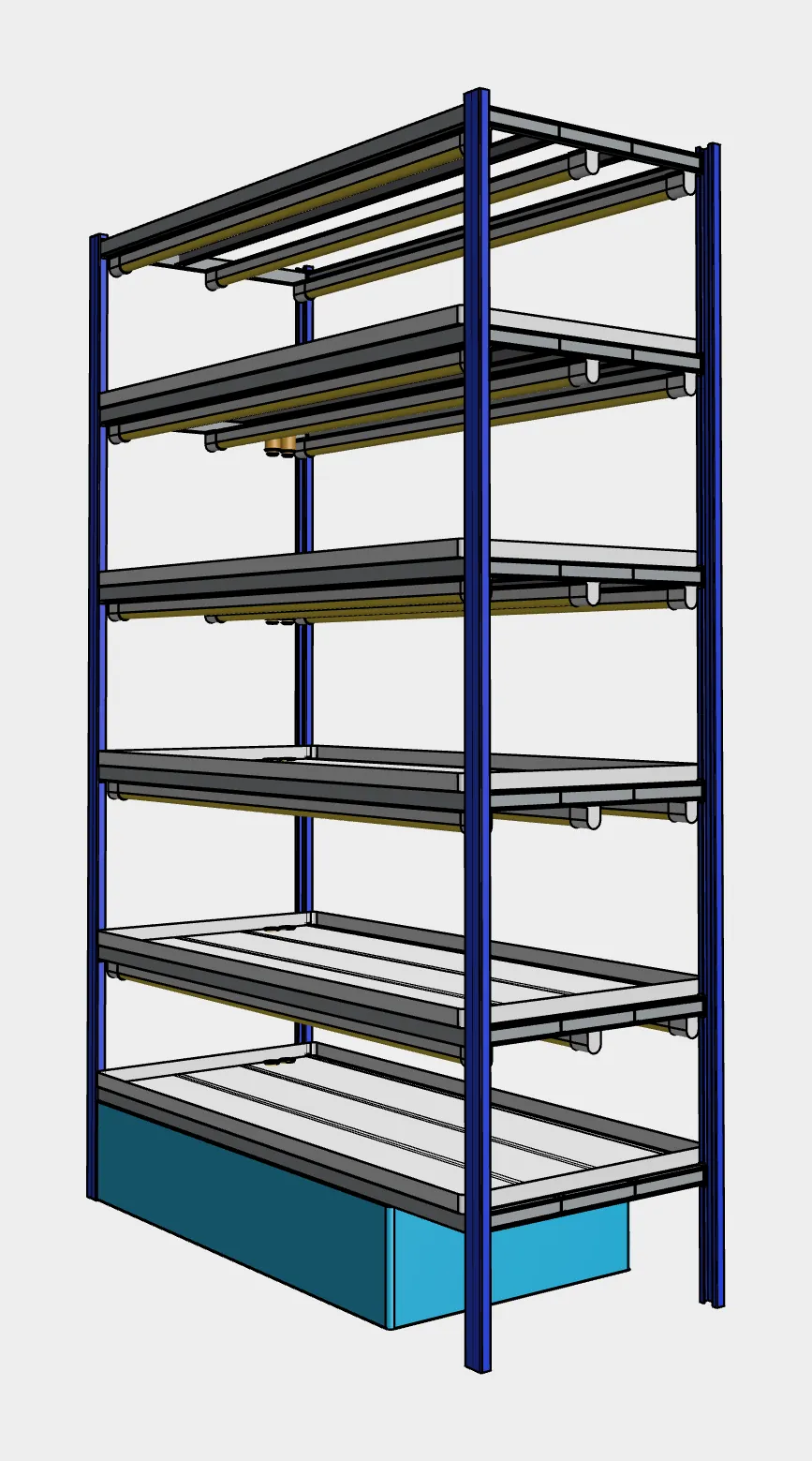
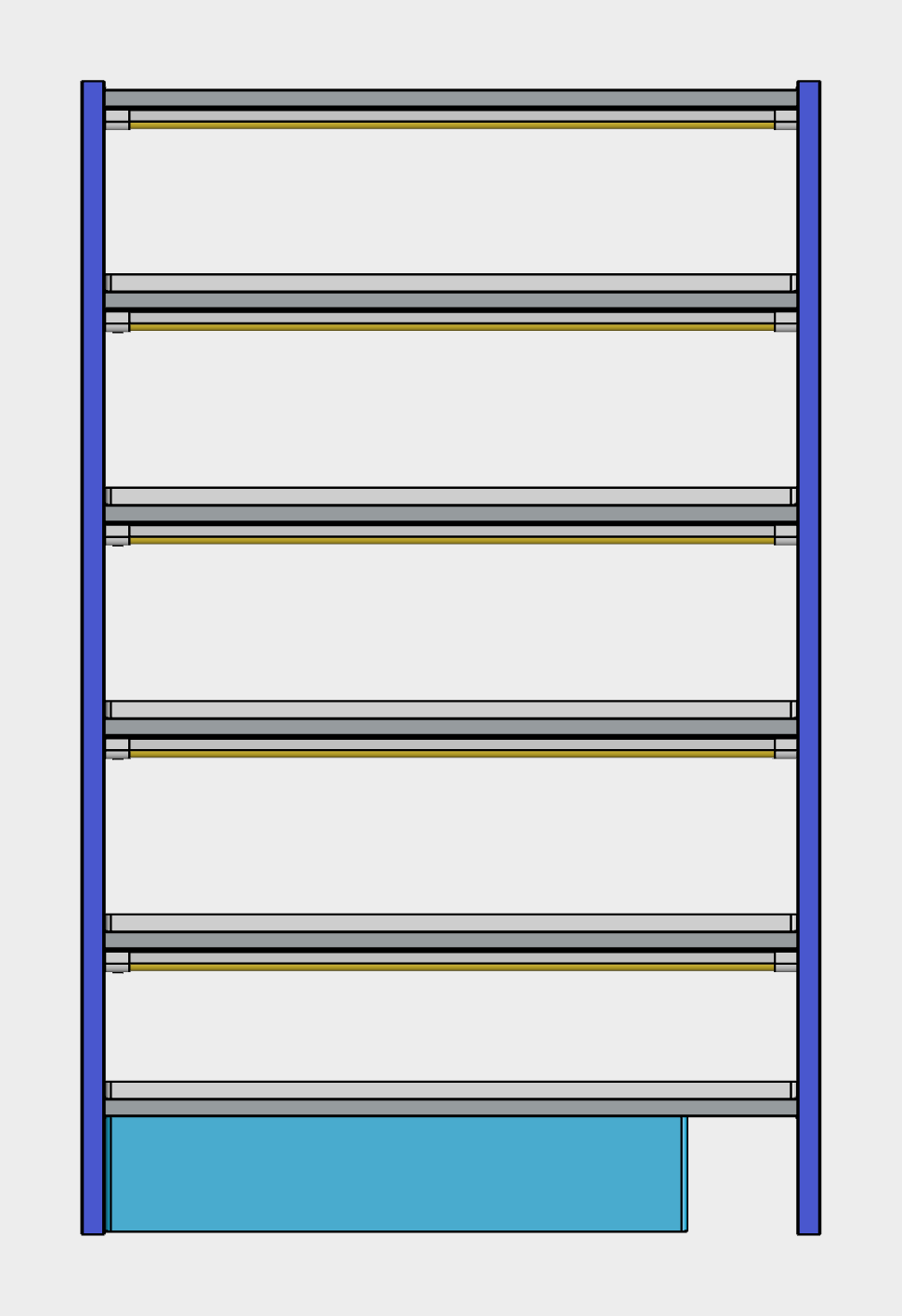
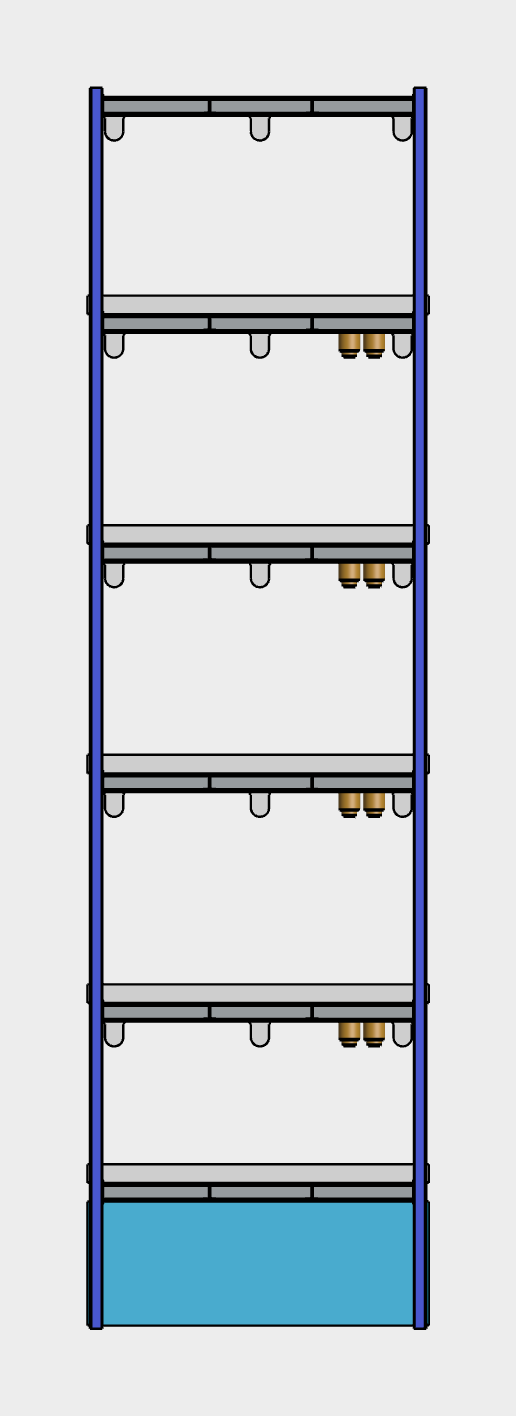
Everything on 0.7 m².
What you harvest every month.
Basil occupies the four lower levels, microgreens the top one. Both cycles run in parallel and feed the shelf continuously, with no seasonal gap.
Basil
350 punnets of 20 g
Microgreens
200 punnets of 20 g
Sowing in cassettes
Seed goes into cassettes, placed on the lowest level.
Two weeks packed tight
After emergence the cassettes stay side by side: maximum plants on minimum surface.
Spread across three levels
Developed cassettes are distributed over three levels, this time spaced — every plant gets light and volume.
Harvest as it sells
You cut only what leaves the shelf that day. Nothing unsold to throw away.
Why this split. Per kilo, basil and microgreens generate comparable shelf revenue, but microgreens need four times fewer working hours. The top level is the most profitable shelf in the module.
What it returns.
| Sold, as % of capacity | Revenue | Net | Payback |
|---|---|---|---|
| 100 % — 550 punnets | €1,260 | €831 | 3.5 months |
| 70 % — 385 punnets | €882 | €511 | 5.7 months |
| 50 % — 275 punnets | €630 | €298 | 9.7 months |
of capacity covers the charges if your own staff runs the module
of capacity — break-even with fully paid labour
contributed by every punnet sold, beyond variable costs
What we guarantee — and what we do not. We stand behind the capacity of the module: 7 kg of basil and 4 kg of microgreens per month. We do not stand behind the number of punnets sold — that is your channel and your price, and the whole spread in the table above comes down to that single variable.
Assumptions: electricity €0.22/kWh, labour €20/h, packaging €0.35 per punnet, selling prices €1.89 and €2.99 per 20 g, rent not included. Result before depreciation, insurance and overheads.
Pilot pricing is available for the first FT-7 installations, in exchange for the right to use your site as a reference. Ask us.
- The assembled module
- Delivery and installation
- On-site staff training
- The starter kit — seed and nutrition
- Support through the first 3 cycles
Two to four weeks.
Site visit
We review the room: socket, water, ventilation, temperature. We define where the module goes and how the product reaches the point of sale.
Delivery and installation
We deliver and assemble the module, connect the control unit, commission irrigation and lighting.
Training
We walk your team through the full cycle on site: sowing, cassette distribution, harvest, packing, tank and solution maintenance.
First sowing
We run the first batch with you, from the starter kit.
First harvest
Microgreens: 7 days. Basil: 3 to 4 weeks after sowing.
Support
We follow you through the first three cycles: agronomy, solution tuning, maintenance protocol.
What we provide
- The assembled module, ready to produce
- Delivery and installation
- On-site staff training
- Starter kit: seed and nutrition
- Support through the first three cycles
- The maintenance protocol
- Agronomy support
What you provide
- 0.7 m² of floor, ceiling ≥ 2.3 m
- One 220 V socket
- Access to water
- A room at around 20 °C
- A clean space for packing
- Your point of sale
Modules add linearly.
Two units occupy 1.4 m² and double the volume. Charges rise proportionally, working time less than double: one trip, one packing run.
We recommend installing both but starting them one after the other — the second when the first reaches around 70 % sell-through. Capacity doubles immediately, whereas demand at the point of sale builds progressively: this way you avoid harvesting unsold stock instead of a second revenue stream. The second module gains from being configured for microgreens — the same revenue for markedly fewer hours.
Not equipment — a category of its own.
Visible freshness
Cut the day it sells, not delivered a week earlier. The difference in aroma and hold is immediate.
Zero unsold
You harvest only what leaves the shelf that day. Until it sells, the product stays a living plant.
All year at one level
Volume depends on neither season nor weather. The shelf does not empty in January.
A product without equivalent
Living basil and microgreens — a category most points of sale simply do not have.
A clear threshold
9 % of capacity covers the running costs. The rest is result.
A test without risk
0.7 m² and a standard socket. If the category works, modules add linearly.
All that remains is the configuration and the schedule.
We settle the crops and the packing format, fix the delivery and installation date, and run the first sowing together. Two to four weeks for delivery and commissioning, then seven days to the first microgreens harvest.
We respond within 48 hours. Confidential — we sign an NDA on request.